Best Bite Alarms 2025
Last updated: January 2026
It’s the sound that rips you from a deep sleep in the dead of night. That first sharp bleep from your bite alarm suddenly rolls into a full-blown one-toner, adrenaline surging as a fish tears off with your bait.
In that moment, nothing matters more than trust. Trust in your rig, trust in your knots, and complete confidence in the small black box on your bankstick that just told you something serious is happening in the water.
That’s why choosing the best bite alarms isn’t a decision to rush.
Walk into any well-stocked tackle shop and you’re faced with rows of alarms flashing LEDs, covered in dials, and carrying price tags that range from budget-friendly to eye-watering. Some promise cutting-edge features, others rely on reputation alone.
The challenge is working out which bite alarms genuinely perform on the bank and which are little more than expensive distractions.
This guide exists for one reason: to help you choose the best bite alarms for real-world carp fishing.
First, we break down the features that actually matter when you’re fishing days, nights, and long sessions—things like sensitivity, reliability, range, and build quality. Then we move on to our top recommendations: bite alarms we’ve tested ourselves and trust season after season.
Whether you’re buying your first set or upgrading your current alarms, this guide points you in the right direction.
Let’s get you sorted with the best bite alarms for your fishing.
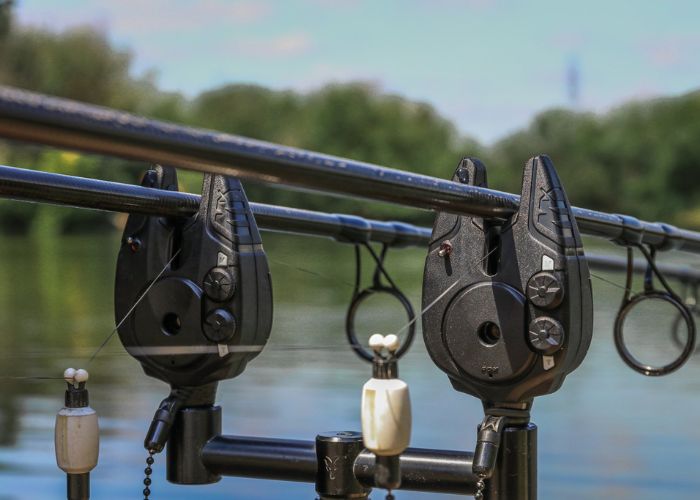
Delkim Txi-D V2
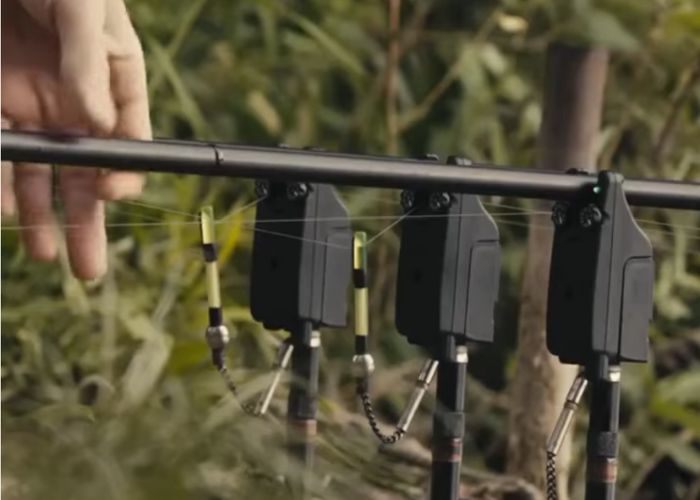
Nash Siren R4
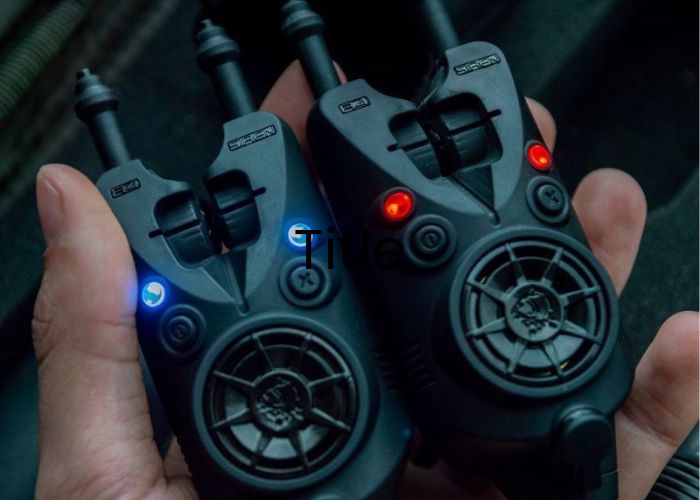
Fox Micron MX
What Are Bite Alarms and How Do They Work?
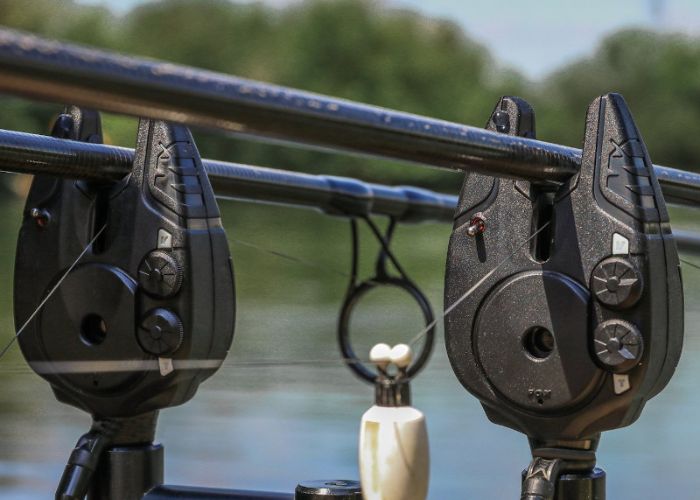
If you’re new to carp fishing, bite alarms are electronic devices that sit on your rod rest and detect when a fish takes your bait. When line moves through the alarm, it triggers an audible beep and LED light to alert you.
Modern alarms also connect to wireless receivers, letting you monitor your rods from inside your bivvy. They’re essential for multi-rod fishing and overnight sessions.
Now, let’s look at the best bite alarms on the market…
1. Delkim Txi-D V2 Bite Alarm
Let’s get one thing straight before we even start: when you’re talking about Delkims, you’re talking about a legacy.
For decades, the old Txi-Plus was the gold standard for bite indication, trusted by some of the best anglers in the country. That iconic Delkim “warble” is a sound that’s etched into the brain of every serious carp angler.
Vibration Sensing & Beep Speed
This is what makes a Delkim a Delkim. It doesn’t use a roller wheel like almost every other alarm; it uses a patented vibration sensing system.
- What it means on the bank: Instead of waiting for the line to move a roller, it’s sensing every tiny pluck, knock, and vibration coming straight down the line from the rig. For detecting liners and the most subtle of drop-back bites, it is absolutely second to none. The new digital processing in the V2 has made this even more refined. You can dial the sensitivity right down in weedy or windy conditions, but you still feel totally connected to what’s happening at the business end.
- Beep Speed Control: This is a classic Delkim feature, perfected here. It allows you to set the speed of the bleeps to match the sensitivity. On a high sensitivity setting, you can have it screaming on a single bleep for a liner, or you can set it so it only gives a one-toner on a proper take. It gives you an incredible level of control over the information the alarm is giving you.
The Bells & Whistles
The biggest update for the Txi-D V2 is bringing all the modern, quality-of-life features to the party, but they’ve done it with that classic Delkim focus on function.
Multi-Colour LEDs
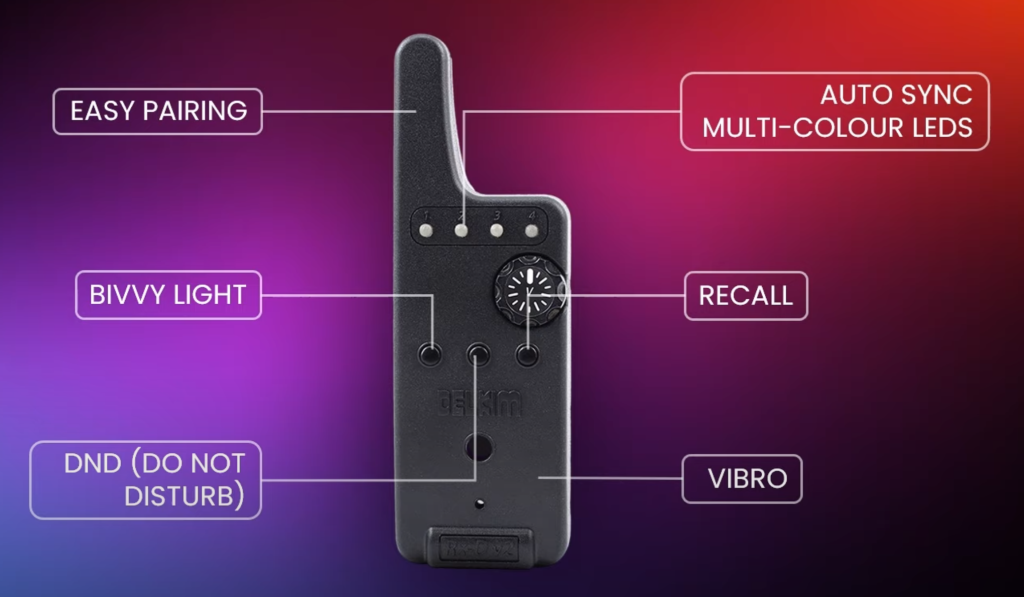
This was a long time coming! For the first time, you can now choose your LED colour (Purple, Red, White, Blue, Green, or Yellow) on each individual head. It’s a simple press-and-hold job to change it, and the setting is saved.
One-Touch Mute
An absolute godsend. A quick press of the button silences the alarm for 30 seconds, giving you enough time to set your bobbin and get the line perfect without the whole lake hearing you. It automatically re-arms itself afterwards.
Day & Night Mode
A genuinely useful feature. You can pre-set two different LED brightness levels.
This means you can have them on a brighter setting for daytime use and then, with a simple button press, switch all your alarms to a dimmer, more discreet setting for the night. The night mode also has “NiteLite” glow, where the LEDs stay dimly lit constantly.
Stealth Mode
For the anglers who want to go completely under the radar, this mode deactivates the LEDs on the Txi-D head, with all indication coming through on your receiver instead.
The Rx-D V2 Receiver
You can’t talk about the Txi-D without mentioning its partner.
The Rx-D receiver is rock-solid. The range is immense – far more than you’ll ever legally need – but that power means it has a bulletproof signal in even the most difficult, overgrown swims.
All the settings on the head are perfectly replicated on the receiver; the colours match, the tone matches, and the drop-back indication is crystal clear.
The anti-theft function (where the receiver screams if an alarm is switched off or moved) is a nice touch for peace of mind.
Final Verdict
So, have they still got the magic? Absolutely.
The Txi-D V2 takes the legendary Delkim sensitivity and wraps it in a modern, user-friendly package packed with genuinely useful features. They’ve managed to simplify the controls while adding more customisation.
They are a serious investment, there’s no hiding that. But you’re not just buying a bite alarm; you’re buying decades of bite indication pedigree, now fully updated for the modern angler.
- Pros: Unrivalled vibration-based bite detection, legendary reliability, fully weatherproof, highly customisable, brilliant one-touch mute.
- Cons: Premium price tag, some traditionalists might miss the simplicity of the old analogue dials.
2. Nash Siren R4 Alarms
If Delkims are the heritage Land Rovers of the bite alarm world, then the Nash R4s are the modern, top-spec Teslas!
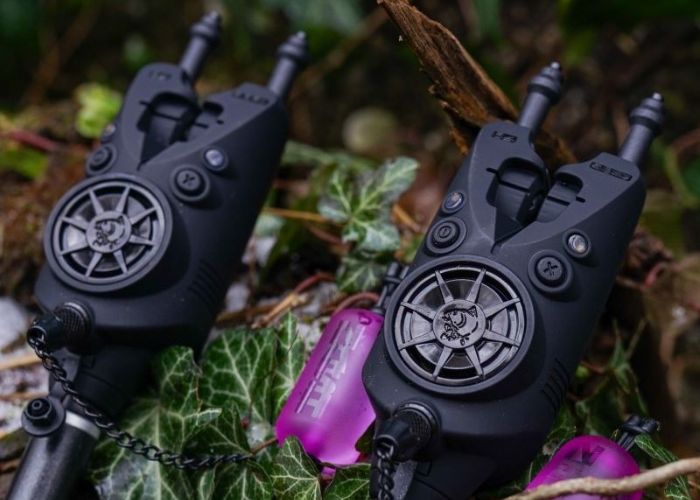
They are crammed with technology, but here’s the thing – it’s not tech for tech’s sake. Every single feature in the R4 has been designed by anglers, for anglers, to solve a real-world problem you’ve likely faced on the bank.
Nash has always been known for clever, outside-the-box thinking, and the R4 is the pinnacle of that philosophy. This isn’t just an alarm that goes “bleep”; it’s a smart device that actively filters out false information to leave you with only the bites that matter.
The “Problem Solver” Features
Forget standard sensitivity for a minute. The R4’s party trick is its ability to think for itself and eliminate the false indications that drive us all mad.
- Wave Sensing Mode: This is an absolute game-changer for anyone who fishes big, windswept pits. We’ve all been there: whitecaps rolling in, bobbins dancing up and down, and you’re getting constant single bleeps. The R4’s tech can differentiate between the rhythmic rocking of waves and a genuine bite, effectively filtering out the chatter so you only get alerted when a carp is involved. It works brilliantly.
- Drift Safeguard: Another incredibly clever function, this time for fishing in weedy conditions or on flowing water. If you get a slow, steady build-up of weed on your line that starts to pull your lead out of position (a “drift”), the R4 will give you a specific alert. This is something most alarms would just register as a slow take, but the R4 lets you know what’s really happening so you can reel in and clear the rig.
Speed Sensing
At its core, the R4 uses a traditional roller wheel, but with a modern twist.
Alongside standard sensitivity settings, it has “Speed Sensing,” which allows it to differentiate between a slow, cautious pickup and a full-blooded screamer, giving you a better audible picture of what kind of take you’re having.
Combined with the decreasing tone for drop-backs, you’re never in any doubt about what’s going on.
Built for the Modern European Angler
You can tell Nash designed this with big waters and boat work in mind.
Homecoming Mode
This is a feature you won’t realise you need until you use it. There’s a rear-facing LED that, when activated, provides a bright, visible reference point.
For anyone dropping rigs from a boat in the dark, it’s a lifesaver, giving you a perfect guiding light to navigate safely back to your swim.
Night Glo Integration
The R4s are designed to be a complete system.
They have a direct MMCX connection port that allows you to plug in the Nash Night Glo bobbins. This gives you a pulsing light on your bobbin that perfectly mimics the alarm head, creating a clean, cable-free, and super-visible setup.
Build & Design
They feel bomb-proof!
The soft-touch rubberised finish is grippy and looks the part, and the integrated, removable snag ears are a fantastic touch—much sleeker than bolt-on afterthoughts.
They are, as you’d expect at this price, 100% waterproof and have been built to withstand some serious abuse.
The Final Verdict
The Nash R4’s are an unashamedly modern, feature-rich alarm.
If you’re an angler who faces challenging conditions – big windy waters, weedy venues, rivers, or you do a lot of boat work – the intelligent sensing and practical features are genuinely groundbreaking.
It’s not trying to be a Delkim; it’s carving its own path as the “thinking angler’s alarm.” If you want a simple, no-frills alarm, this probably isn’t for you.
But if you want a sophisticated tool that can be fine-tuned to give you an incredible advantage in tough conditions, the R4 is arguably the most advanced bit of kit on the bank right now.
- Pros: Groundbreaking wave and drift sensing, brilliant Homecoming Mode for boat work, superb build quality, seamless integration with the Night Glo range.
- Cons: The sheer number of features can be a little overwhelming at first, premium price point.
3. Gardner ATTs Bite Alarms
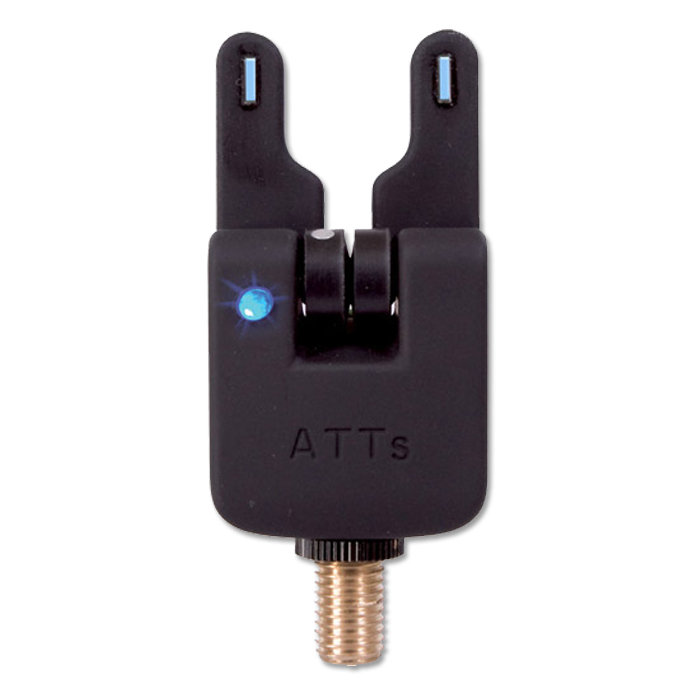
The Gardner ATTs Bite Alarms are a revolutionary addition to the world of carp angling, offering a silent alarm system that is both reliable and discreet.
Designed with the needs of anglers in mind, these alarms come packed with features aimed at enhancing your fishing experience.
In this in-depth review, we will explore the key features, performance, usability, and angler reviews.
First Impressions
Upon receiving the Gardner ATTs Bite Alarms, my initial impressions were overwhelmingly positive.
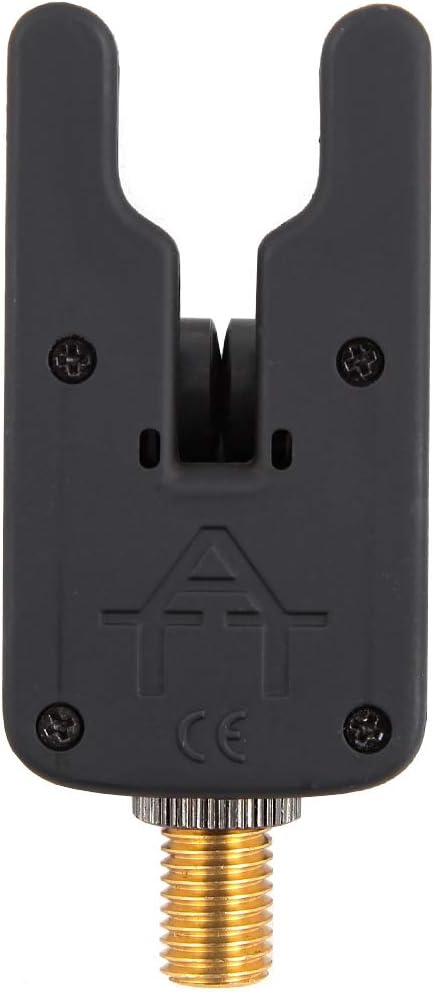
The alarms are impeccably designed, with a soft-touch rubberised finish that not only provides protection for your rods but also gives them a sleek and professional look. The packaging is robust and well-presented, reflecting the quality of the product inside.
Key Features
Silent Alarm System
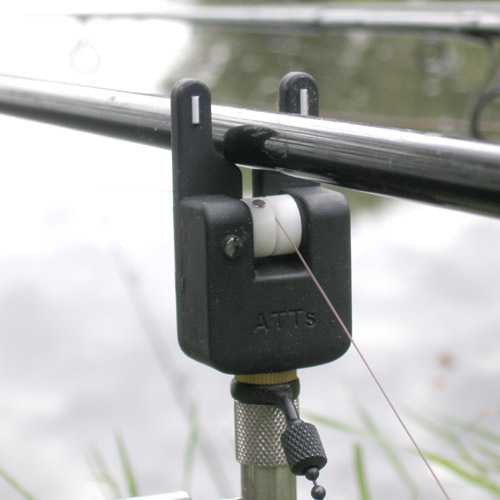
The standout feature of the Gardner ATTs Bite Alarms is their silent operation. With no built-in speaker, all audible indications come from the connected ATTx receiver, making these alarms perfect for anglers who prefer a discreet setup.
Built-in Transmitters
Equipped with built-in transmitters, the Gardner ATTs Bite Alarms offer a full wireless remote buzzer-receiver system. This seamless connectivity allows for hassle-free operation and ensures that you never miss a bite.
100% Watertight
One of the most impressive features of the Gardner ATTs Bite Alarms is their watertight construction. With no buttons, jack-plug sockets, or speakers to worry about, these alarms are built to withstand the elements and provide reliable performance in any conditions.
High ‘Ears’ and False Beep System
The high ‘ears’ on the Gardner ATTs Bite Alarms prevent lateral rod movement and reduce the risk of a rod being pulled off the alarm during aggressive takes.
Additionally, the unique ‘false beep’ system eliminates false alarms, ensuring that you only get alerts when a fish is on the line.
Digital Circuitry and Low Battery Warning
The Gardner ATTs Bite Alarms feature high-quality digital circuitry and an FM radio for optimal performance. The low battery warning system alerts you when the battery is running low, preventing any interruptions to your fishing session.
User-Changeable Roller Wheels
With multi-coloured user-changeable roller wheels, the Gardner ATTs Bite Alarms offer versatility and customisation. The two and four magnet roller wheels allow you to adjust the sensitivity of the alarms to suit your fishing preferences.
Performance & Usability
In terms of performance, the Gardner ATTs Bite Alarms excel in all aspects. The alarms are incredibly sensitive and responsive, ensuring that you never miss a bite.
Setting them up is a breeze, as there are no buttons or knobs to fiddle with – simply place your rod on the alarm, and you’re ready to go. The compact and lightweight design of the alarms makes them easy to transport and set up on the bank.
What Anglers Are Saying
After analysing customer reviews, it’s clear that the Gardner ATTs Bite Alarms are highly regarded by anglers.
The majority of users praise the alarms for their reliability, discreet operation, and impressive performance. Some users have noted minor issues when using the alarms with light indicators, but overall, the feedback is overwhelmingly positive.
Pros and Cons
Pros
- Revolutionary silent alarm system
- Built-in transmitters for wireless operation
- 100% watertight construction
- High ‘ears’ and false beep system for added security
- Digital circuitry and low battery warning
- User-changeable roller wheels for customization
- Compact and lightweight design
Cons
- Some users have reported issues when using the alarms with light indicators
Why Buy?
The Gardner ATTs Bite Alarms are a game-changer in the world of carp angling.
With their innovative silent alarm system, built-in transmitters, and host of other features, these alarms offer unmatched performance and reliability.
Whether you’re fishing in challenging conditions or simply looking to enhance your angling experience, the Gardner ATTs Bite Alarms are a must-have for any carp angler.
FAQs
Can the Gardner ATTs Bite Alarms be used with other receivers?
Yes, the alarms can be used with existing ATTx V2 receivers, providing flexibility and compatibility.
Are the alarms supplied with batteries?
Yes, the Gardner ATTs Bite Alarms come with a free test battery as standard, ensuring that you can start using them right away.
How do I adjust the sensitivity of the alarms?
The Gardner ATTs Bite Alarms come with user-changeable roller wheels, allowing you to customize the sensitivity to suit your fishing preferences.
Is there a warranty on the Gardner ATTs Bite Alarms?
Yes, Gardner offers a full 2-year warranty on the ATTs Bite Alarms, providing peace of mind for anglers.
4. Fox Micron MX Bite Alarms
The Fox Micron MX Bite Alarm is a top-of-the-line carp fishing alarm designed to enhance your angling experience.
With its advanced features and user-friendly design, this bite alarm is a must-have for any serious angler looking to up their game on the bank.
First Impressions
Upon first inspection, the Fox Micron MX Bite Alarm exudes quality craftsmanship and attention to detail.
The sleek design and robust build give off a sense of durability, while the packaging ensures that your new alarm arrives in pristine condition.
The multiple high-vis LED colours are a standout feature, allowing you to customize your setup to suit your preferences.
Key Features
- High visibility 4mm multi-coloured LED: Easily spot any movement or indication of a bite.
- Indexed volume and tone adjustment dials: Fine-tune your alarm to suit your fishing conditions.
- Built-in I-Com transmitter technology: Connect to MX Receiver for enhanced functionality.
- Tru-run roller wheel: Detect even the slightest movement from wary fish.
- D-Tech Sensing System: Ensures accurate bite detection in any conditions.
Performance & Usability
The Fox Micron MX Bite Alarm performs flawlessly in real-world scenarios, providing anglers with reliable bite indication and precise sensitivity adjustments.
Whether fishing individually or as part of a set with the MX Receiver, this alarm delivers consistent results. The intuitive design makes it easy to use, even for beginners, while the silent start-up feature ensures you won’t disturb the peace of the water.
What Anglers Are Saying
Overall, customers have praised the Fox Micron MX Bite Alarm for its exceptional performance and user-friendly features.
The high-quality construction and reliable bite detection have garnered positive feedback, with many users noting the ease of customization with the LED colours.
A few minor complaints have been raised regarding battery life, but these are outweighed by the alarm’s numerous benefits.
Pros and Cons
Pros:
- Customizable LED colours
- Precise sensitivity adjustments
- Reliable bite detection
- Easy to use
- Durable construction
Cons:
- Slightly shorter battery life
Summary
In conclusion, the Fox Micron MX Bite Alarm is a standout product in the world of carp fishing alarms.
With its advanced features, customizable LED colours, and reliable performance, this alarm is a game-changer for anglers looking to elevate their fishing experience.
I highly recommend the Fox Micron MX Bite Alarm to any angler serious about their craft.
FAQs
Can the LED colours be changed on the fly?
Yes, the LED colours can be changed by pushing the rubber touch button on the rear of the alarm.
Is the Fox Micron MX Bite Alarm compatible with other Fox bite alarms?
Yes, the alarm can be used individually or connected to the same range receiver with the built-in I-com transmitter.
How long do the batteries typically last in the Fox Micron MX Bite Alarm?
The alarm is powered by 2 x AAA batteries and provides reliable performance for extended fishing sessions.
Does the Fox Micron MX Bite Alarm come with a warranty?
Fox offers a warranty on their products, ensuring peace of mind for anglers investing in their gear.
Decoding Bite Alarms: What a Good Set Really Needs
Let’s have a proper chat about bite alarms!
It’s easy to get blinded by fancy features and flashing lights, but at 3 a.m. in the driving rain, none of that matters if your alarms let you down.
Your alarms are your ears – and sometimes your eyes – on the bank. They’re arguably the most important piece of electronics you’ll own, so choosing the right set is a decision you want to get right first time.
Forget the marketing hype for a minute. This is what I look for after decades on the bank, from windswept gravel pits to snaggy little club waters.
1. Essential Bite Alarm Features Explained
Let’s break down the critical features that separate excellent alarms from average ones.
Sensitivity Adjustment
What it is: Controls how much line movement is needed before the alarm triggers a beep.
Why it matters:
- Windy/Flowing water: Reduce sensitivity to avoid constant false bleeps from line movement
- Calm conditions/pressured fish: Increase sensitivity to detect the most cautious pickups
- Liners and drop-backs: High sensitivity settings catch bites other anglers miss
What to look for:
- Easy-to-adjust dial or digital controls
- Wide sensitivity range (typically 1-10 or Low-High settings)
- Settings that hold reliably even when wet
Volume Control
What it is: Adjusts how loud the alarm beeps.
Why it matters:
- Day fishing: Higher volume so you can hear it while walking around or chatting
- Night fishing: Lower volume to avoid waking other anglers or disturbing wildlife
- Busy lakes: Helps you hear your alarms over background noise
What to look for:
- Independent volume control on each alarm head
- Separate volume control on the receiver
- Silent/mute modes for ultra-discreet fishing
Tone Adjustment
What it is: Changes the pitch/sound of the beep each alarm makes.
Why it matters:
- Multi-rod fishing: Instantly identify which rod is producing a take without looking
- Busy lakes: Differentiate your alarms from anglers fishing nearby
- Personal preference: Some tones are easier to hear or less jarring when sleeping
What to look for:
- At least 3-5 different tone settings per alarm
- Clear, distinct differences between tones
- Tones that cut through wind and rain
LED Light Indicators
What it is: Visual lights on the alarm that flash when line moves.
Why it matters:
- Night fishing: See which rod has gone off without hearing the beep
- Windy conditions: When sound doesn’t travel well, LEDs provide visual confirmation
- Silent mode: When you’ve muted the alarm, LEDs still give indication
What to look for:
- Multi-colour LEDs: Different colours for each rod (red, green, blue, white, purple, yellow)
- Brightness control: Dimmer night mode and brighter day mode
- Latching LEDs: Stay lit for 15-20 seconds after a beep so you can see which rod went off
- Directional indication: Different colours for forward runs vs. drop-backs
Wireless Receiver Capability
What it is: Built-in transmitter that sends all alarm activity to a remote receiver.
Why it matters:
- Bivvy fishing: Receive all indications inside your shelter
- Range: Monitor rods from 100m+ away (though you should stay close legally)
- Freedom: Move around, cook, rest—stay connected to your rods
What to look for:
- Reliable range: Minimum 100m in real-world conditions
- Signal strength: Maintains connection through vegetation and obstacles
- Interference resistance: Won’t drop signal when other anglers use receivers nearby
- Two-way communication: Some systems allow you to control alarm settings from the receiver
Waterproofing
What it is: Protection against rain, condensation, and moisture.
Why it matters:
- British weather: Alarms must survive torrential rain and damp conditions
- Condensation: Early mornings create heavy dew that can penetrate poor seals
- Longevity: Water damage is the #1 killer of budget alarms
What to look for:
- IP ratings: IP66 or IP67 for serious water resistance
- Sealed construction: No exposed buttons, sockets, or openings
- Tested performance: Proven track record in wet conditions
- Warranty coverage: Manufacturer confidence in waterproof claims
The Feature Hierarchy:
- Must-haves: Sensitivity, volume, tone, basic LED, waterproofing
- Should-haves: Wireless receiver, multi-colour LEDs, drop-back indication
- Nice-to-haves: Adjustable LED brightness, night mode, advanced sensing tech
Focus your budget on getting the must-haves and should-haves right. The nice-to-haves are exactly that—nice, but not essential.
2. The Receiver: Your Bivvy Lifeline
The best alarms in the world are useless if the signal doesn’t get to the receiver in your bivvy.
- Signal Strength & Range: It’s not about being 200 yards away from your rods. It’s about having a signal that won’t drop out when you’re tucked behind thick foliage or in a swim with a dodgy signal.
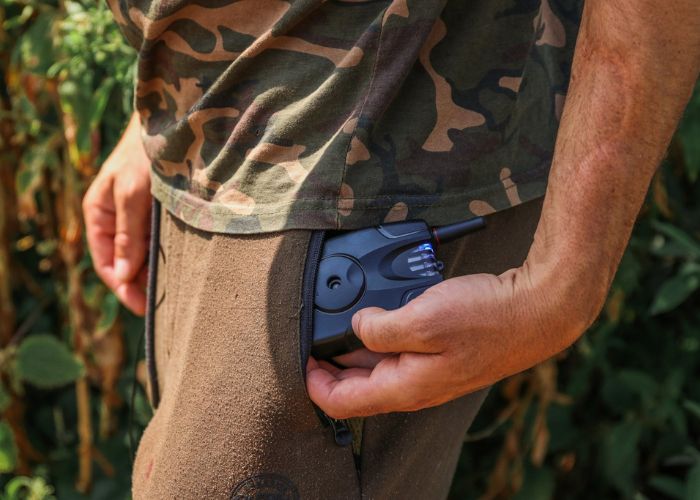
- Battery Life & Warning: The receiver should last for days, if not weeks, on a single set of batteries. A low-battery warning is an absolute must-have.
- Vibration Mode: Perfect for keeping quiet on the bank and not disturbing others, or for when you have the volume turned down low while you sleep.
3. The “Game-Changer” Features
Once the basics are covered, these are the features that separate a good alarm from a great one.
- Mute Function (One-Touch): The ability to press one button to silence the alarm for 30-60 seconds is invaluable. It lets you set your bobbins and get the line perfect after a cast without the alarm screaming at you and annoying everyone on the lake.
- Latching vs. Running LEDs: A good alarm will have two LEDs. One (the latching LED) stays lit for about 20 seconds after a bleep so you know which rod went off if you missed the initial indication. The other (the running LED) will only flash while the line is being pulled from the spool.
- Stealth/Covert Mode: Turns off all the lights on the alarm heads for anglers who want to be as discreet as possible.
4. Why You Need Bite Alarms with a Receiver
While the alarm heads on your rods do the detection work, it’s the receiver that transforms your bite indication setup from good to exceptional.
Here’s why a receiver is a non-negotiable part of any serious carp angler’s kit:
Bivvy-Based Indication When you’re inside your shelter – cooking, sleeping, or just staying dry – you need to know the instant something happens on your rods.
The receiver sits with you, transmitting every beep, tone, and LED flash from your alarm heads directly into your bivvy.
Extended Range Quality receivers maintain a strong signal even in challenging conditions: thick vegetation, distance, and electronic interference all become manageable with a good receiver system.
Multi-Rod Management The receiver displays which specific rod has produced the indication. With colour-coded LEDs and different tones, you can instantly identify whether it’s your left margin rod or your far-bank rod that’s producing action which is critical information when you need to react fast.
Key Features to Look For:
- Range: Look for receivers with at least 100-150m range (though legal distance is typically much less)
- Battery life: Minimum 7-10 days of continuous use
- Vibration alerts: Essential for sleeping or for keeping quiet on the bank
- Volume control: Independent volume adjustment from the alarm heads
- Low battery warnings: Both for the receiver and individual alarm heads
Popular Receiver Systems:
- Delkim Rx-D V2: Pairs perfectly with Txi-D alarms, exceptional range
- Nash Siren S5R: Works seamlessly with R4 alarms, vibration and sound alerts
- Fox MX Receiver: Compatible with Micron MX series, excellent value
Without a quality receiver, you’re essentially tethered to your rods. With one, you have complete freedom of movement while maintaining total awareness of your rigs.
5. Are Expensive Bite Alarms Worth It?
This is the question every carp angler asks when they see Delkims or Nash R4s commanding £100+ per alarm head. Let’s have an honest conversation about value.
The Short Answer: It depends entirely on how you fish and what you prioritise.
When Premium Alarms ARE Worth It:
Reliability Over Years A £120 Delkim used 50+ nights a year for 10 years costs £2.40 per session. A £30 budget alarm that fails after 2 seasons costs £15 per session. Premium alarms are an investment, not an expense.
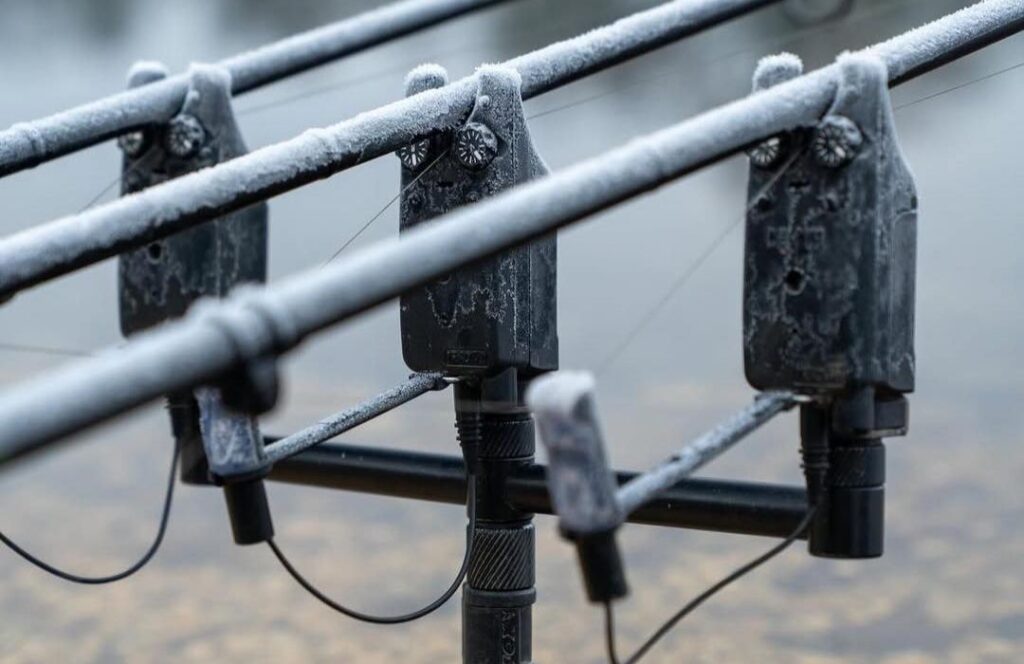
Extreme Conditions If you fish through harsh British winters, heavy rain, and brutal winds, the waterproofing, build quality, and consistent performance of premium alarms is worth every penny. Cheap alarms fail in exactly these conditions when you need them most.
Sensitivity for Difficult Waters On hard, pressured waters where fish are incredibly cautious, the superior sensitivity and drop-back detection of top-end alarms like Delkims can be the difference between landing fish and blanking.
When Mid-Range Alarms Are Perfect:
If you fish 10-20 times a year in reasonable conditions, a quality mid-range alarm like the Fox Micron MX (around £50-60 per head) gives you 90% of the performance for half the price.
When Budget Alarms Make Sense:
For complete beginners who aren’t sure if carp fishing will become a long-term commitment, starting with budget-friendly alarms (£20-40 per head) is perfectly sensible. Learn the basics, then upgrade when you know what features matter to you.
The Real Cost of Cheap:
What you save on cheap alarms, you often lose in:
- False indications (wasting time and energy)
- Missed bites (lost fish)
- Weather-related failures (ruined sessions)
- Frequent replacements (buying twice or three times)
My Recommendation: If you fish seriously (20+ sessions per year), invest in premium alarms. They’ll outlast and outperform anything cheaper, paying for themselves in reliability and performance.
If you’re fishing occasionally or just starting out, buy the best mid-range alarms you can afford (Fox, Sonik, JRC). Avoid the absolute cheapest because you’ll regret it.
6. Understanding the Different Types of Bite Alarms
Not all bite alarms work the same way. Understanding the different types helps you make an informed choice based on your fishing style.
1. Roller Wheel Alarms
This is the most common type of bite alarm used in carp fishing today.
How they work:
- Your fishing line passes over a small roller wheel inside the alarm
- When the line moves, the roller spins and triggers a sensor
- The sensor activates the beep and LED
Pros:
- Reliable and proven technology
- Easy to understand and maintain
- Works well in most conditions
- Used by most major brands (Fox, Nash, Gardner, Sonik)
Cons:
- Can sometimes struggle with incredibly subtle takes
- Requires occasional cleaning to prevent debris build-up
Best for: Most carp anglers, all skill levels, versatile across all venues
2. Vibration Sensing Alarms
The most famous example is Delkim, which pioneered this technology.
How they work:
- Instead of a roller wheel, they use patented vibration sensing
- The alarm detects vibrations transmitted down the fishing line
- Incredibly sensitive to the slightest movement
Pros:
- Unmatched sensitivity for detecting liners and subtle takes
- Extremely responsive to drop-backs
- No moving parts to maintain or clean
Cons:
- Premium price point
- Can be overly sensitive in very windy conditions (requires adjustment)
Best for: Experienced anglers fishing pressured waters, those who want the absolute best bite detection
3. Magnetic Wheel Alarms
A variation of the roller wheel design that uses magnets for sensitivity adjustment.
How they work:
- The roller wheel has magnets embedded in it
- Sensors detect the magnetic field as the wheel rotates
- You can add or remove magnets to change sensitivity
Pros:
- Highly customisable sensitivity
- Smooth, quiet operation
- User-adjustable without electronic settings
Cons:
- Slightly more complex to set up initially
Best for: Anglers who fish varied conditions and want mechanical sensitivity control
A newer, less common technology.
How they work:
- Use optical sensors or electronic motion detection
- Completely silent operation (no roller noise)
- All indication comes through the receiver
Pros:
- Silent on the bank (perfect for stealthy fishing)
- No mechanical parts to fail
- Weatherproof with no moving parts
Cons:
- Limited models available
- Often more expensive
- Relies entirely on receiver (no sound at the rod)
Best for: Anglers who value silence and discretion, stalking-style fishing
Which Type Should You Choose?
- Beginners: Start with roller wheel alarms (Fox, Sonik, JRC) because these are proven, reliable and affordable
- Intermediate anglers: Upgrade to vibration sensing (Delkim) or advanced roller systems (Nash R4)
- Specialist/challenging venues: Vibration sensing alarms (Delkim) for ultimate sensitivity
- Stealth anglers: Optical alarms (Gardner ATTs) for silent operation
The “best” type is the one that matches your fishing style, budget, and the conditions you regularly face.
A Final Word…
Before you get drawn in by things like colour-changing LEDs and bivvy light syncing (which are great, but are luxuries), make sure the core functionality is perfect.
My advice?
Invest in reliability first and foremost. A set of Delkims or Nevilles from 20 years ago still works perfectly because they were built to do one job flawlessly: tell you when you’ve got a fish on.
Modern alarms should be no different.
Do You Need Bobbins with Bite Alarms?
Yes, absolutely. Bite alarms and bobbins (or swingers/hangers) work together as a complete indication system—each has a distinct role.
What Bite Alarms Do:
- Detect line movement via the roller wheel
- Provide audible and visual alerts (beeps and LEDs)
- Transmit signals to your receiver
What Bobbins Do:
- Provide instant visual confirmation of a take
- Maintain tension on the line between the reel and the rod tip
- Show the direction of the take (rising bobbin = fish moving toward you, dropping bobbin = fish moving away)
- Allow you to see line movement even when the alarm doesn’t beep (e.g., very slow takes)
Why You Need Both:
Imagine this scenario: Your alarm beeps once. Is it a fish, or did the wind just rock the bobbin? With a visual check of the bobbin, you know instantly. If the bobbin has risen significantly or dropped to the floor, it’s a fish. If it’s still in position, it was likely a false indication.
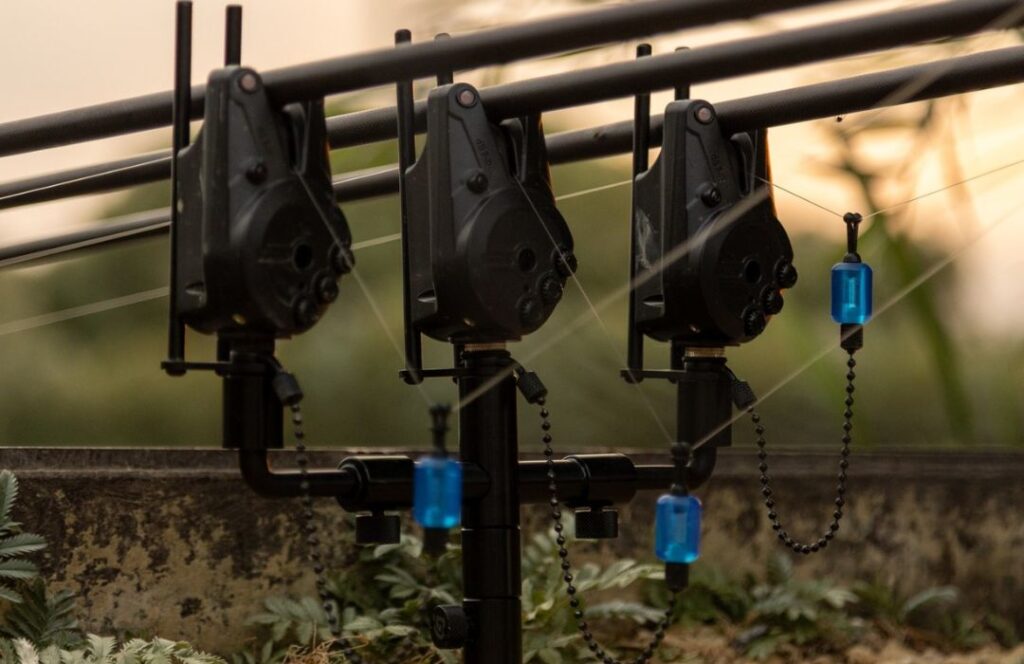
Types of Bite Indication:
- Bobbins (Clip-on indicators): Traditional, weighted indicators that clip onto your line. Great for windy conditions.
- Swingers: Hang beneath the alarm on arms. Provide excellent visual indication and work brilliantly for short-range fishing.
- Hangers: Similar to swingers but with adjustable tension. Ideal for long-range fishing or flowing water.
Illuminated Options:
Modern bobbins often have built-in lights or glow sticks for night fishing. Some (like Nash Night Glo bobbins) connect directly to your alarms for synchronised lighting.
Bottom Line: Bite alarms tell you something is happening. Bobbins show you exactly what is happening. Together, they give you complete, reliable bite indication that you can trust in any conditions.
The Final Cast: Which Alarm is Right for Your Bankside?
So there you have it!
From the legendary, ultra-sensitive warble of the Delkim Txi-D and the problem-solving brain of the Nash R4, to the silent, bombproof reliability of the Gardner ATTs and the unbeatable all-round performance of the Fox Microns, we’ve covered some of the best bite indicators to ever grace the bank.
Ultimately, the ‘best’ alarm isn’t the one with the most features or the highest price tag; it’s the one that best suits your style of fishing.
Are you a purist who needs to know about every single liner and subtle knock? The Delkims are in a league of their own.
Do you tackle massive, windswept pits where wave action is a constant battle? The R4’s intelligent sensing is nothing short of a revelation.
Are you a stealthy angler who values silence and absolute reliability above all else? The ATTs system is practically bulletproof. Or do you need a dependable, feature-packed alarm that does everything well without breaking the bank? The Fox Microns have earned their reputation for a reason.
Think about the waters you fish, the conditions you face, and what you truly need from your indication. Invest wisely, and you’ll be buying a partner for your bankside adventures for many years to come.
Tight lines.